
The Great Gutter Guard Showdown: Traditional vs. Micromesh vs. Gutter Foam
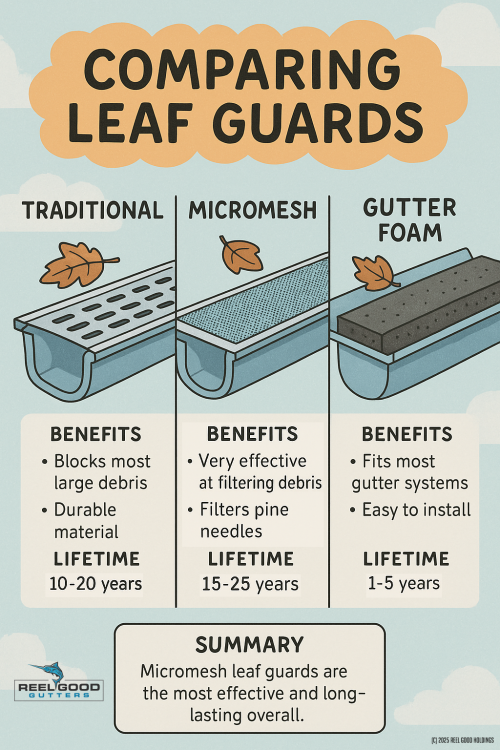
If you’ve ever spent a Saturday afternoon on a ladder cleaning leaves and debris out of your gutters, you’ve probably wondered if there’s a better way. There is. Gutter guards can dramatically reduce maintenance while protecting your home from water damage. But not all guards are created equal — and the wrong choice can cost you more in the long run.
Here at Reel Good Gutters, we’ve installed hundreds of gutter guard systems across Northern Utah. We’ve seen what works and what doesn’t in Utah’s unique climate — with its heavy snowfall, freeze-thaw cycles, and intense UV exposure. This guide will help you make an informed decision.
The Three Main Types
1. Traditional Aluminum Gutter Guards
Traditional guards are perforated aluminum panels that sit over your gutters, allowing water to pass through while blocking larger debris like leaves and twigs.
Pros
- Most affordable option
- Long lifespan: 10–20 years
- Effective against large debris
- Easy to install and replace
Cons
- Fine debris (pine needles, seed pods) can still pass through
- May require occasional cleaning
- Lower performance in heavy snowfall
Best for: Homes with deciduous trees that shed larger leaves. Budget-conscious homeowners who still want solid protection.
2. Micromesh Gutter Guards
Micromesh guards use a fine stainless steel mesh that allows water through while blocking virtually all debris — including pine needles, seed pods, and even shingle grit.
Pros
- Superior debris protection (blocks nearly everything)
- Longest lifespan: 15–25 years
- Low maintenance — truly “set it and forget it”
- Best performance in snow and ice conditions
Cons
- Higher upfront cost
- On steep roofs with heavy rainfall, water can overshoot
- Professional installation strongly recommended
Best for: Homes surrounded by pine trees or fine-debris vegetation. Homeowners who want maximum long-term protection and minimum maintenance.
3. Gutter Foam Inserts
Foam inserts are a porous foam tube that sits inside the gutter, filtering debris while allowing water to flow around it.
Pros
- Very inexpensive
- Can be DIY installed
- No tools required
Cons
- Short lifespan: 1–5 years
- Foam can harbor algae, moss, and pests
- Not recommended for Utah’s climate (freezing degrades foam quickly)
- Debris can become embedded and is difficult to clean
Best for: Temporary solution only, or those looking for a quick solution.
Our Recommendation for Utah Homeowners
Utah’s climate is demanding. Between the heavy wet snow, freeze-thaw cycles, and cottonwood seed season, your gutters need serious protection. Our recommendation:
- Maximum protection: Micromesh — it’s the only guard system that truly holds up through Utah winters.
- Great value: Traditional aluminum guards are a solid mid-range choice for homes without heavy fine-debris vegetation.
- Skip entirely: Foam inserts are not built for Utah’s weather.
Professional Installation Matters
Roof-related work ranks among the most dangerous household activities. Beyond safety, improper guard installation can void roof warranties and lead to water infiltration. All Reel Good Gutters installations include:
- A pre-installation gutter inspection and cleaning
- Proper slope adjustment for optimal water flow
- Sealed end caps to prevent debris entry
- A final flush-and-flow test
Need gutters, repairs, or a free estimate? We're ready.
Contact Us Today →