
Ice Dams: Why They Form, Why They're Dangerous, and How Heat Tape Fixes It
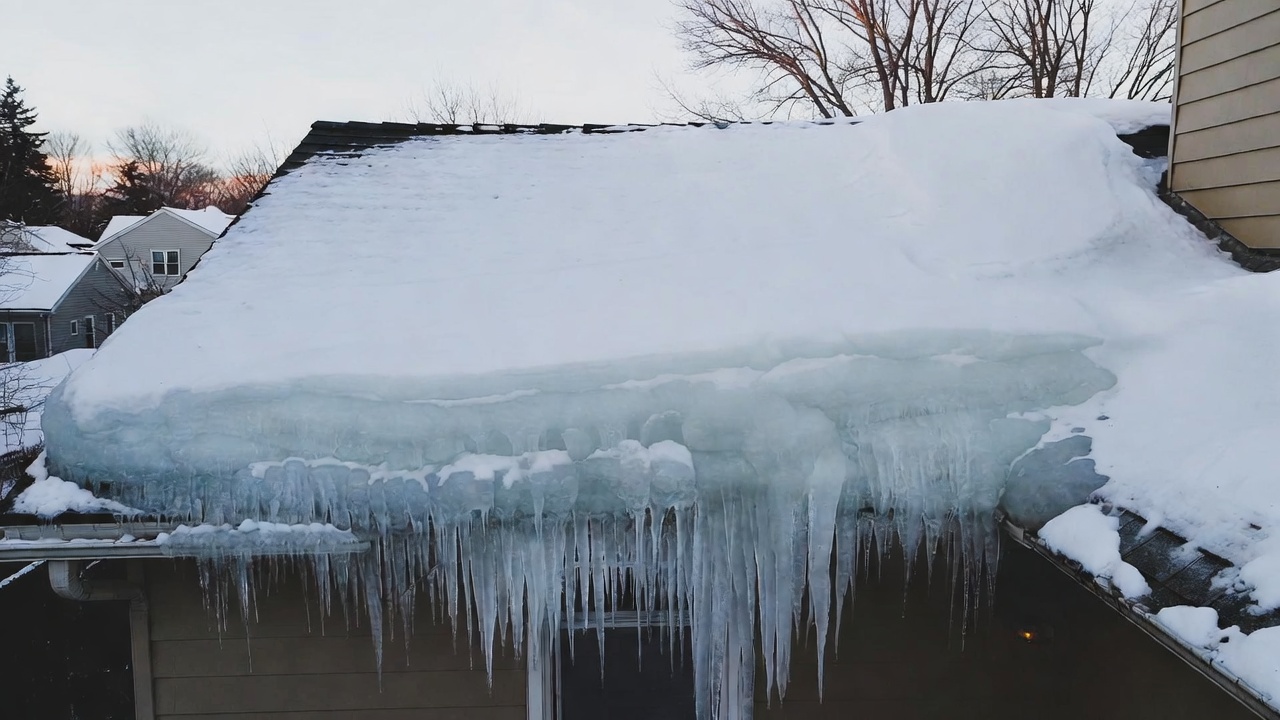
If you’ve lived through a Utah winter, you’ve seen them: thick curtains of icicles hanging from roof edges, or that telltale ice ridge building up at the eave. It looks dramatic — and it is. Ice dams are one of the most destructive winter problems a homeowner can face. But they’re also preventable.
This guide explains exactly what ice dams are, what causes them, why they cause so much damage, and how heat tape provides a complete solution that lets melt water safely drain all the way from your roof to the ground.
What Is an Ice Dam?
An ice dam is a ridge of ice that forms at the edge of a roof and prevents snowmelt from draining off. Once the dam forms, water backs up behind it and can work its way under shingles, into the roof deck, and eventually into your walls, insulation, and ceilings.
The word “dam” is exactly right: the ice acts like a small earthen dam, pooling water where you absolutely do not want it.
How Ice Dams Form
Ice dams are the result of uneven temperatures across your roof. Here’s the three-step process:
- Heat escapes from your living space into your attic. Warm air from your home rises and, if insulation or ventilation is inadequate, warms the attic — which warms the roof deck above it.
- Snow on the upper roof melts from below. The warm roof deck melts snow from the bottom up. That melt water flows down the slope toward the eave.
- Melt water refreezes at the cold eave. The eave overhangs past the heated attic. No warm air rises beneath it, so it stays near ambient temperature — often well below freezing. The melt water hits this cold zone, refreezes, and builds up over time into an ice dam.
Once an ice dam fully forms, water finds any available path. It presses against shingle edges, squeezes under flashing, soaks into the roof deck, and eventually shows up as a stain on your ceiling — or worse.
Why Ice Dams Are So Destructive
The damage isn’t just cosmetic. Ice dams cause:
- Roof deck rot — Prolonged moisture saturation destroys the OSB or plywood your shingles are nailed to. Once the deck is compromised, the entire roof section may need replacement.
- Ceiling and wall water damage — Once water gets through the roof, it soaks insulation, stains drywall, and can ruin paint, flooring, and personal belongings below.
- Mold and mildew — Moisture trapped in insulation and wall cavities creates ideal conditions for mold growth. Remediation can cost far more than the original damage repair.
- Gutter destruction — Ice dams frequently overflow into gutters. The sheer weight of ice can pull gutters away from the fascia, bending hanger brackets and splitting seams.
- Structural damage — In severe cases, water infiltration reaches wall framing and structural members, causing swelling, warping, and long-term integrity issues.
The cost of ignoring it: A single ice dam season can easily result in $5,000–$20,000 in water damage — far more than the cost of a properly installed heat tape system. And in Utah’s climate, if you’ve had one ice dam, you’ll likely have them every winter without intervention.
How Heat Tape Solves the Problem
Heat tape (also called heat cable or roof de-icing cable) is a low-wattage electrical heating element installed along the roof edge, inside the gutter, and down the downspout. Rather than melting all the snow on your roof, heat tape does something simpler and smarter: it creates a clear channel that gives melt water a path to escape.
Here’s the key insight: ice dams only cause damage because water has nowhere to go. Heat tape gives it somewhere to go — all the way to the ground.
The system works in three connected segments:
- On the roof: Heat tape keeps a channel along the roof edge above freezing. Melt water running down the slope finds this warm lane instead of a wall of ice, and flows through it toward the gutter.
- In the gutter: The same heat tape extends into the gutter, preventing it from becoming a frozen ice block that backs water up onto the roof.
- Down the downspout: Heat tape continues down inside the downspout, keeping it clear so water can exit at ground level — completing the full drainage path from rooftop to safe discharge.
When all three sections work together — roof edge, gutter, and downspout — water never gets a chance to pool and refreeze. It drains continuously, eliminating the pressure behind ice dam formation entirely.
Why All Three Sections Must Be Protected
Many homeowners (and some contractors) make the mistake of only installing heat tape on the roof. But if the gutter or downspout is frozen, water will still back up. Think of it like a plumbing drain — if any section is blocked, the whole system backs up.
Incomplete Installation
- Heat tape on roof only
- Melt water reaches frozen gutter
- Gutter overflow — ice dam re-forms
- Frozen downspout backs up at the bottom
Complete System
- Roof edge + gutter + downspout
- Continuous clear channel from roof to ground
- Water drains properly at every stage
- Full ice dam prevention
A heat tape system is only as effective as its most frozen point. If the downspout freezes, the gutter fills, and the dam re-forms — even with roof heat tape in place. A complete installation protects the entire drainage path.
Heat Tape Options for Utah Homes
Not all heat tape performs the same. At Reel Good Gutters, we install three tiers based on your home’s needs and exposure:
- Residential constant-wattage (120V): Fixed output, reliable, and affordable. Best for standard homes with moderate ice dam exposure on typical eave lengths.
- Self-regulating mid-grade (120V): Automatically adjusts output based on temperature — more heat when it’s coldest, less as it warms. More energy-efficient for longer installations and fluctuating Utah winters.
- Commercial self-regulating (120V/240V): Higher wattage for larger homes, commercial buildings, or roofs with severe ice dam exposure. Available in both voltages for maximum flexibility.
Not sure which tier fits your home? Our team evaluates your roof pitch, eave exposure, attic insulation, and local microclimate before recommending a system. Compare all three heat tape tiers →
Act Before the Ice Does
Ice dams don’t give much warning. One week you have snow on the roof; the next you have a wet ceiling. The time to address the problem is before ice season — not after the first puddle appears inside.
If you’ve seen ice buildup at your roofline in previous winters, you’re at high risk this year. A properly installed heat tape system creates a permanent, automated solution: when temperatures drop and snow falls, the cable keeps the drain path open automatically.
Serving all of Northern Utah. Reel Good Gutters installs heat tape systems across all of Northern Utah. We provide free on-site estimates and can typically schedule installation within one to two weeks.
Need gutters, repairs, or a free estimate? We're ready.
Contact Us Today →